Mara accepts the drawing check. The transcript labels her sentence “Ken,” and the action list assigns Ken the task. Correcting the displayed name repairs only one possible error: the words and the commitment still need checking.
Review three things separately: what was said, who said it, and what that person accepted. Diarization groups speech by speaker. Identification adds a name or role. Neither turns a suggestion or an unidentified question into an agreed task.
Read the ten seconds behind the action
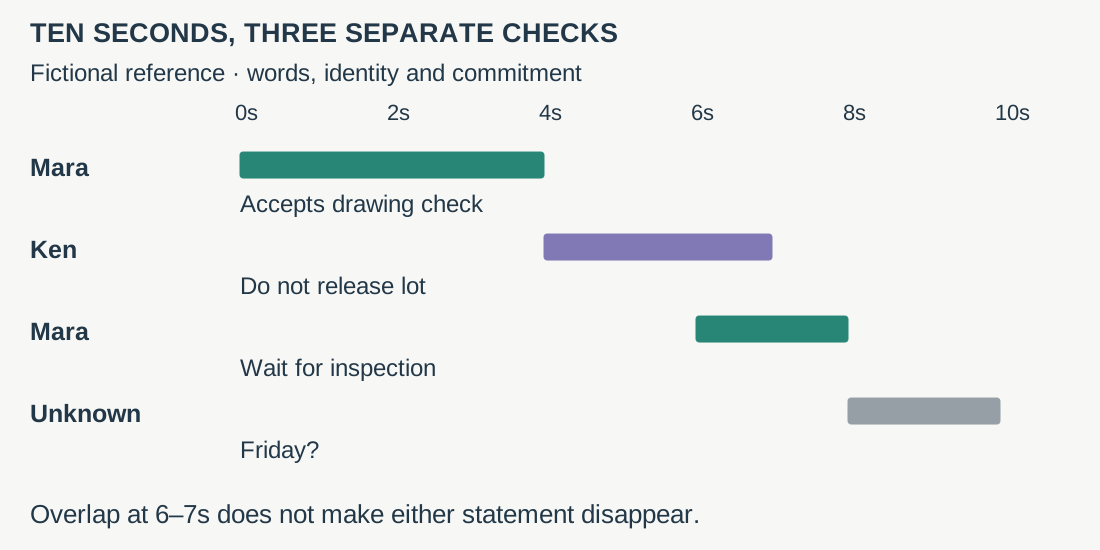
The usable action is “Mara: check the drawing; deadline to confirm.” Keep the lot-release prohibition and inspection dependency beside it. The excerpt does not identify an inspection owner.
Ask how the product obtains the name
| Approach | How the name is established |
|---|---|
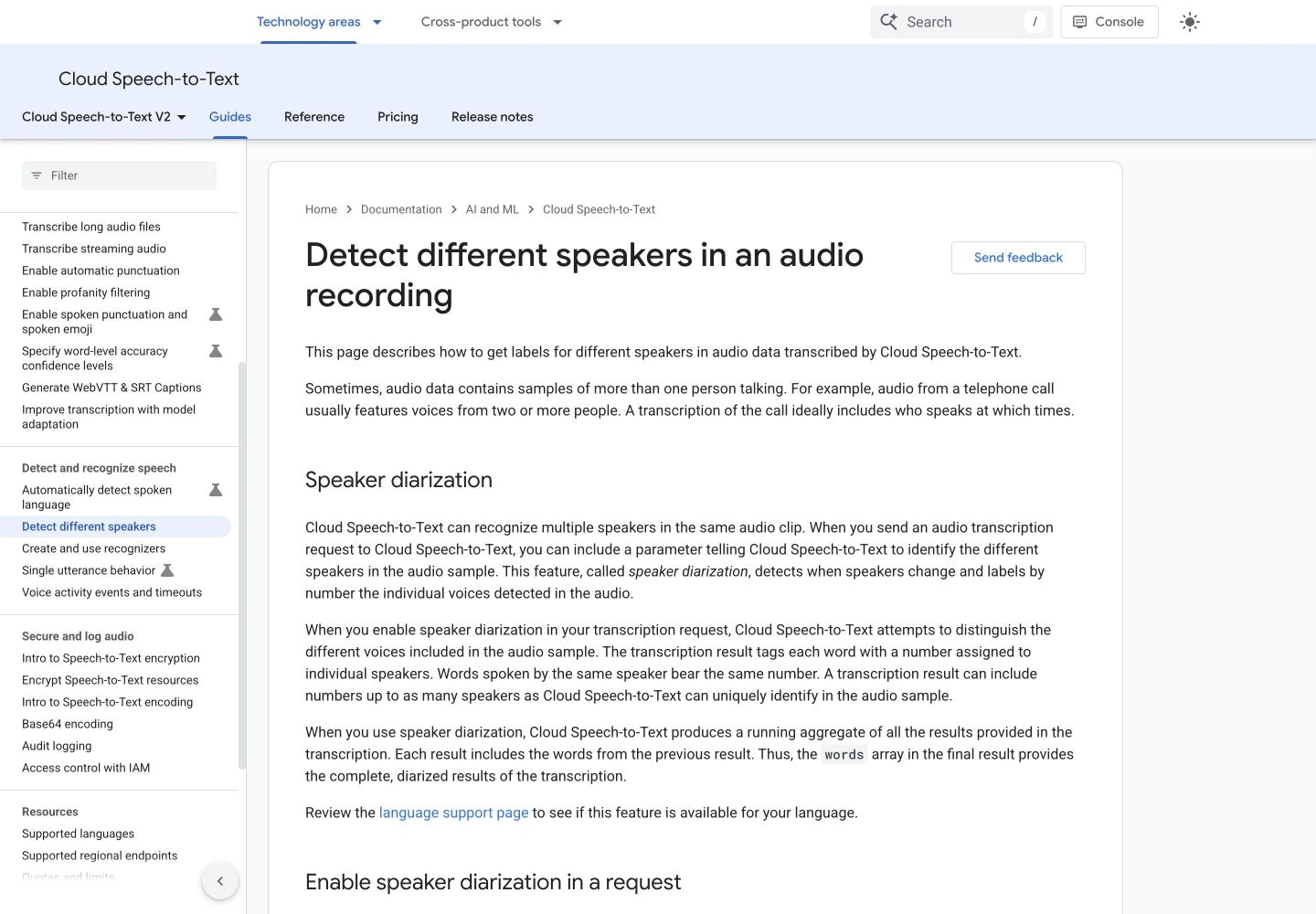
| Google diarization | Numbered speaker groups need a separate link to a person. Availability varies by model/language. |
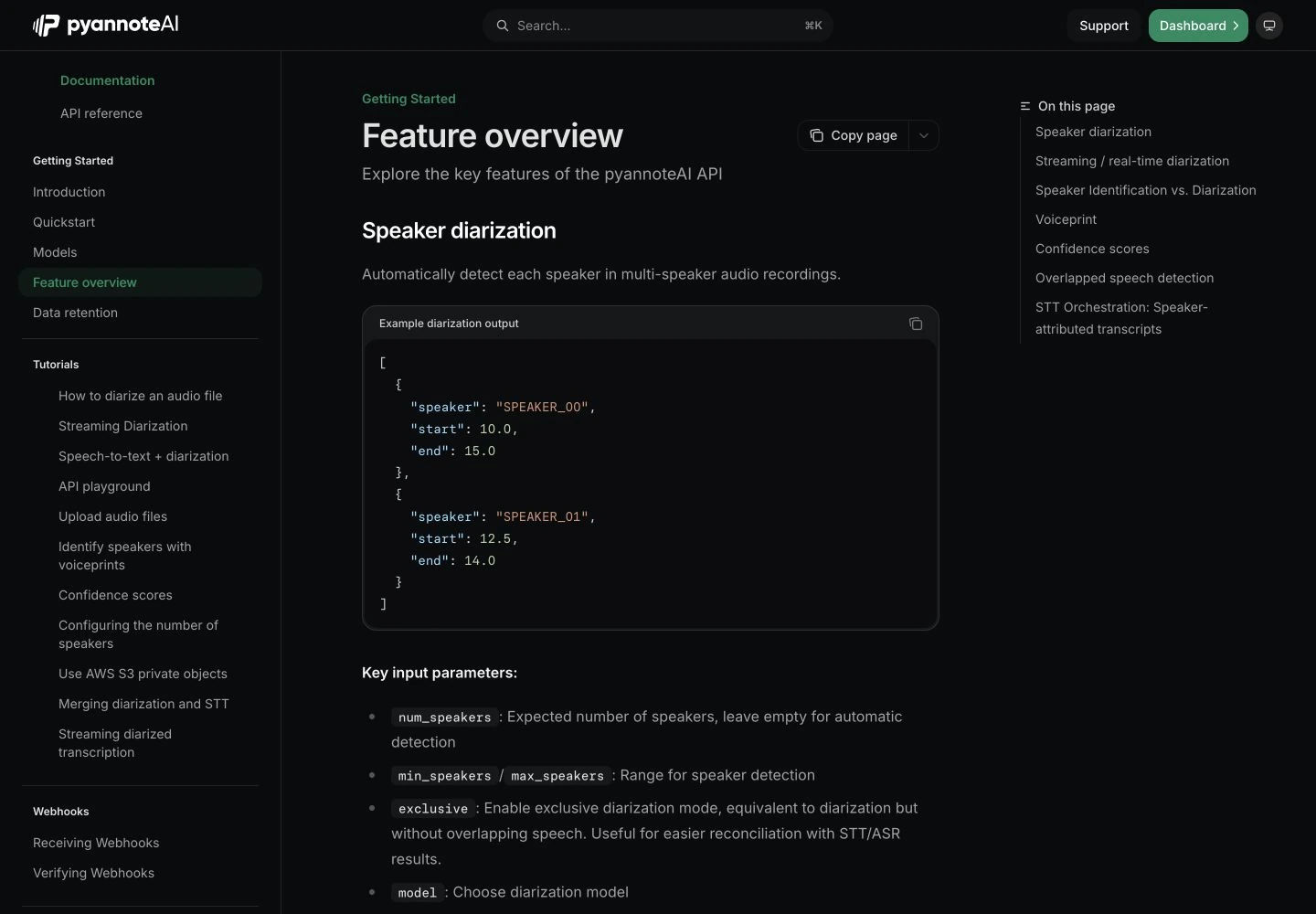
| pyannoteAI identification | Voiceprint matching needs appropriate reference audio, permissions and review of uncertain matches. |
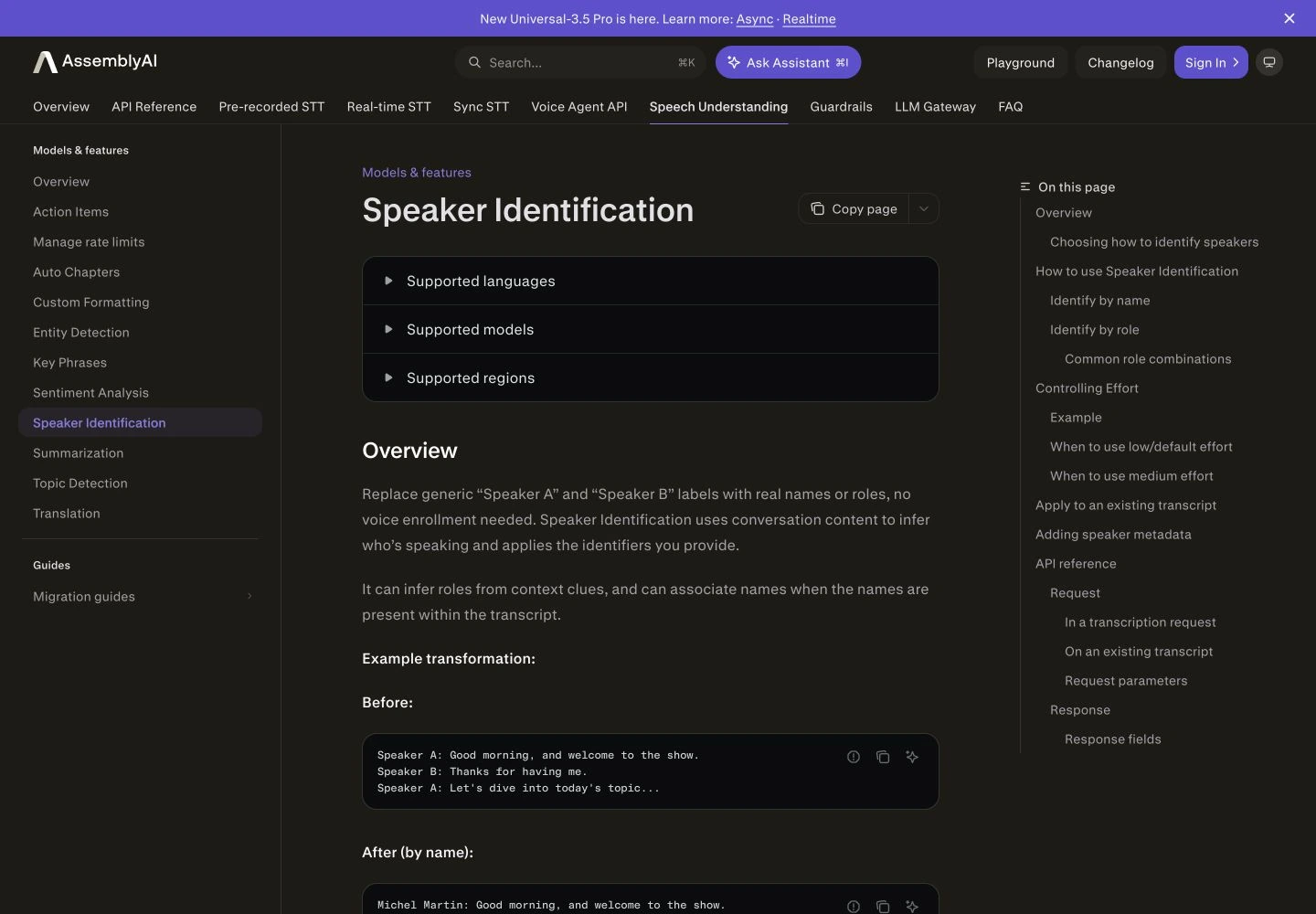
| AssemblyAI Speaker Identification | Infers names/roles from conversation without voice enrollment. Context must distinguish the speaker from someone merely mentioned. |
Sources: Google , pyannoteAI , AssemblyAI .
These methods may sit inside a meeting application’s own attribution layer. Ask about that layer before switching its speech provider. VoicePing’s speaker guide documents attribution in the generated AI Summary; it does not independently verify every displayed identity or establish a manual relabel control.
Repair one disputed commitment
Replay the passage and establish the speaker with someone who can confirm it. Keep unclear words as inaudible and unknown identities unresolved. A shared room microphone’s display name is weak evidence for which person spoke.
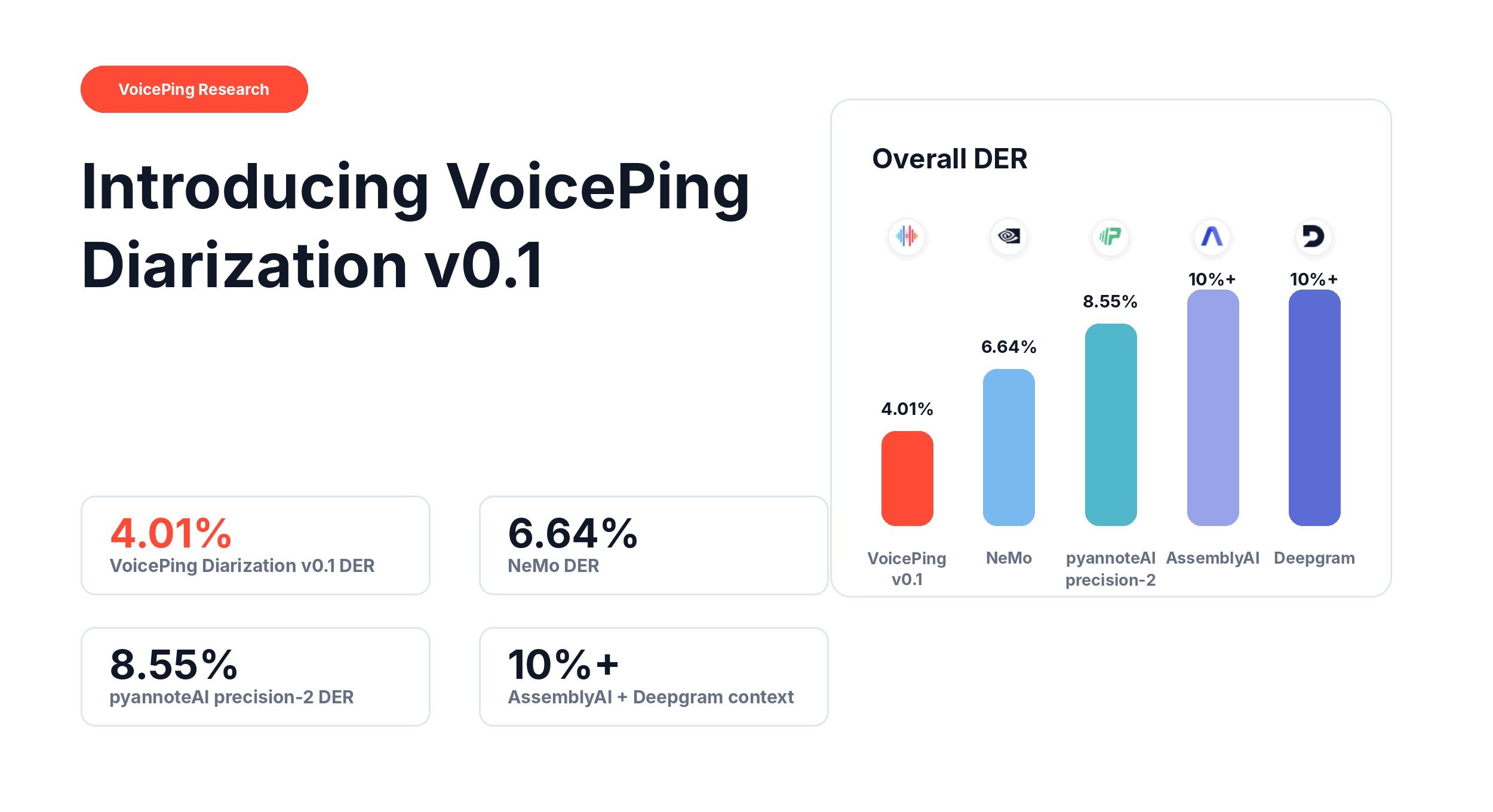
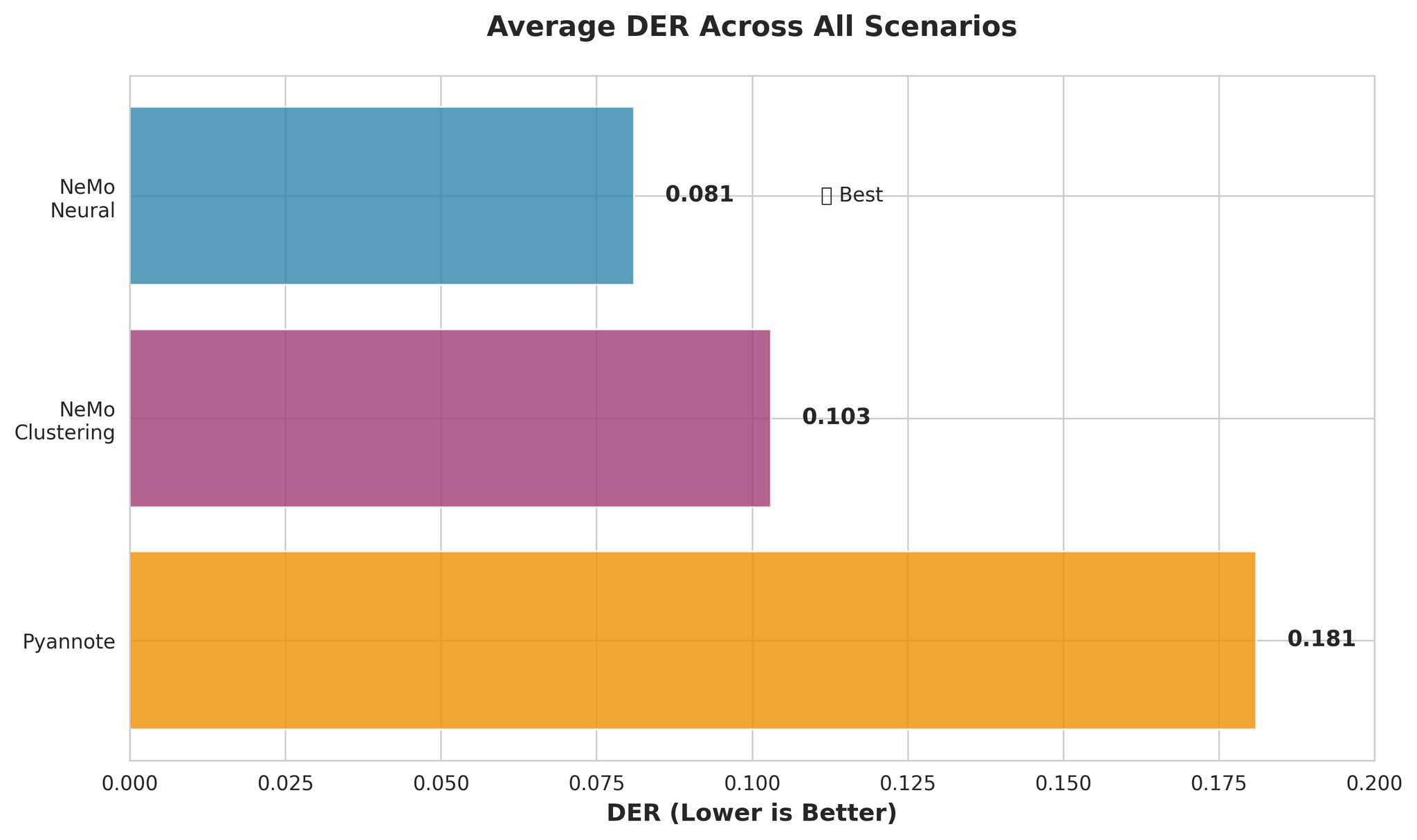
For evaluation, include brief interjections, overlap and the room’s actual microphone arrangement. Word error rate tests words; diarization error rate tests speech segmentation/grouping under stated scoring rules. Neither alone verifies displayed names or accepted commitments. pyannote scoring reference .
Record correctly named statements against statements with known reference identity, and report how many reviewed statements remain unidentified. Then count unsupported or wrongly assigned actions. Otherwise, excluding difficult voices can hide the problem.
Use the attribution worksheet to attach the source times and correction to the meeting. Update the task after its owner and date are confirmed—or explicitly left open.
Documentation reviewed September 6, 2026. The excerpt is synthetic; no audio or product result is reported.
Sources and service screenshots (3)
Public reference pages captured September 6, 2026.