“Who owns the fixture review now?” Answering that question requires two meeting passages. It does not require sharing a recording or publishing a task.
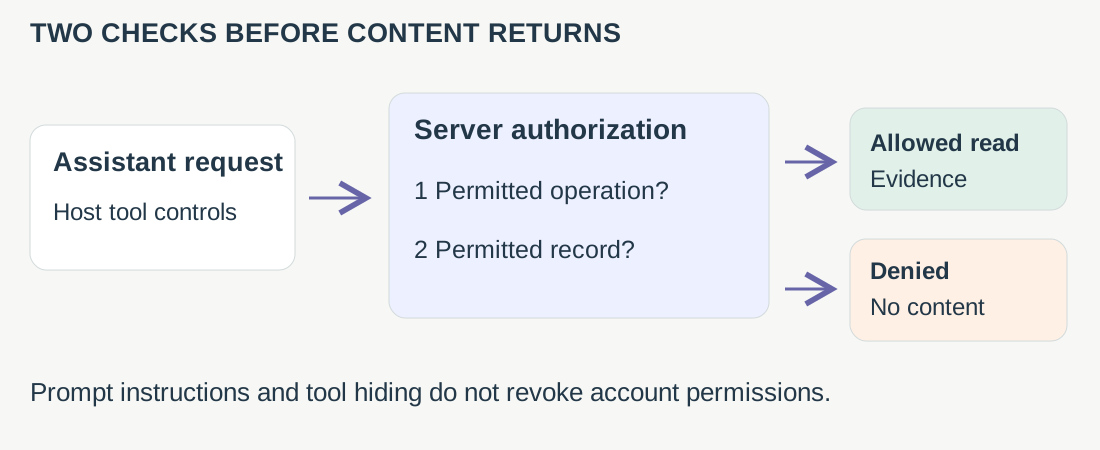
Before calling an MCP connection read-only, check its server scopes, the connected account’s record access and the host’s tool restrictions separately. A prompt expresses intent. Hiding a write tool in one client does not revoke the underlying permission.
Put the restriction where requests are authorized
| Connection | Access boundary to verify |
|---|---|
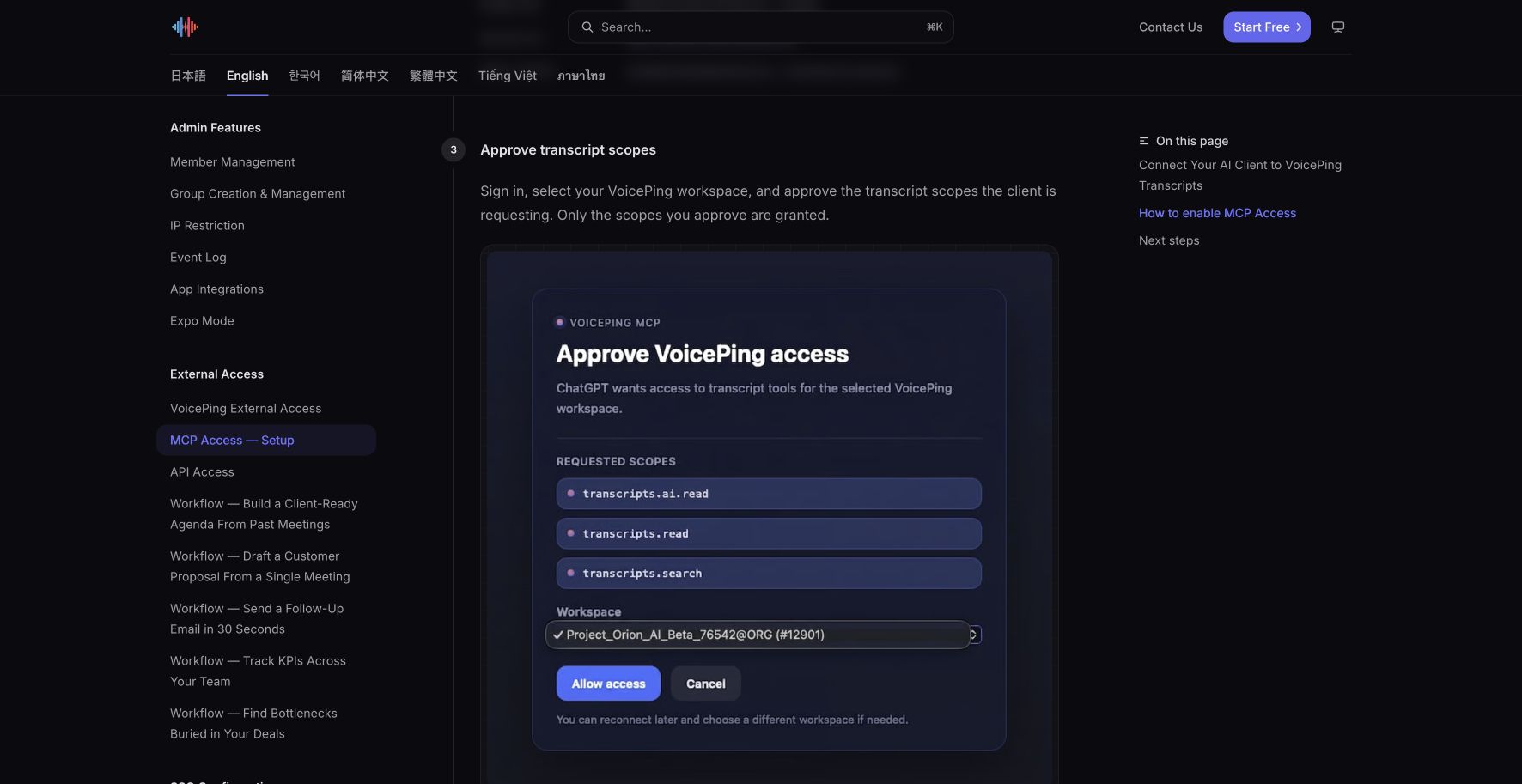
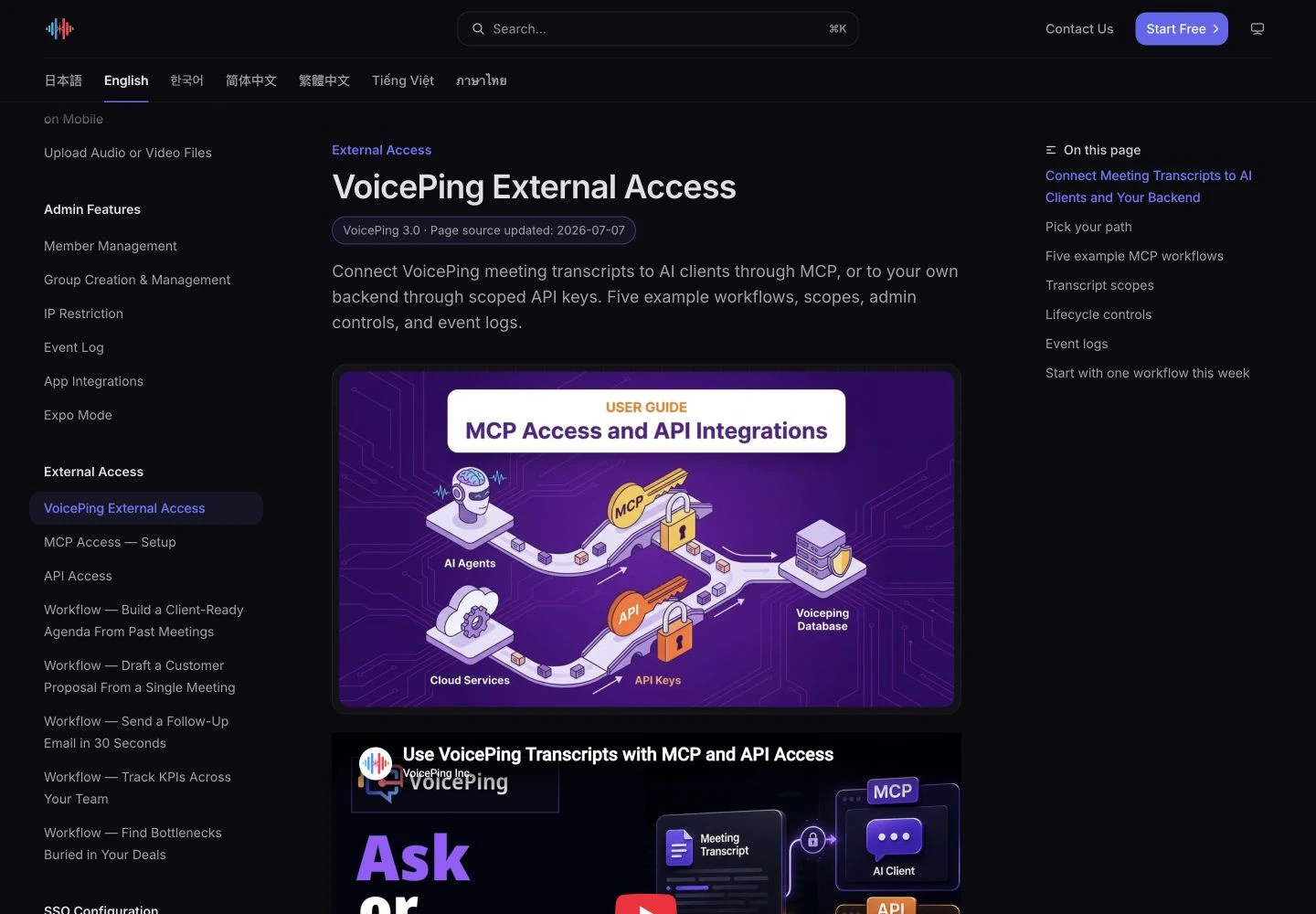
| VoicePing | transcripts.search, transcripts.read, transcripts.ai.read; deactivate/delete connections. Check which records the account can retrieve: scopes do not enumerate meetings. |
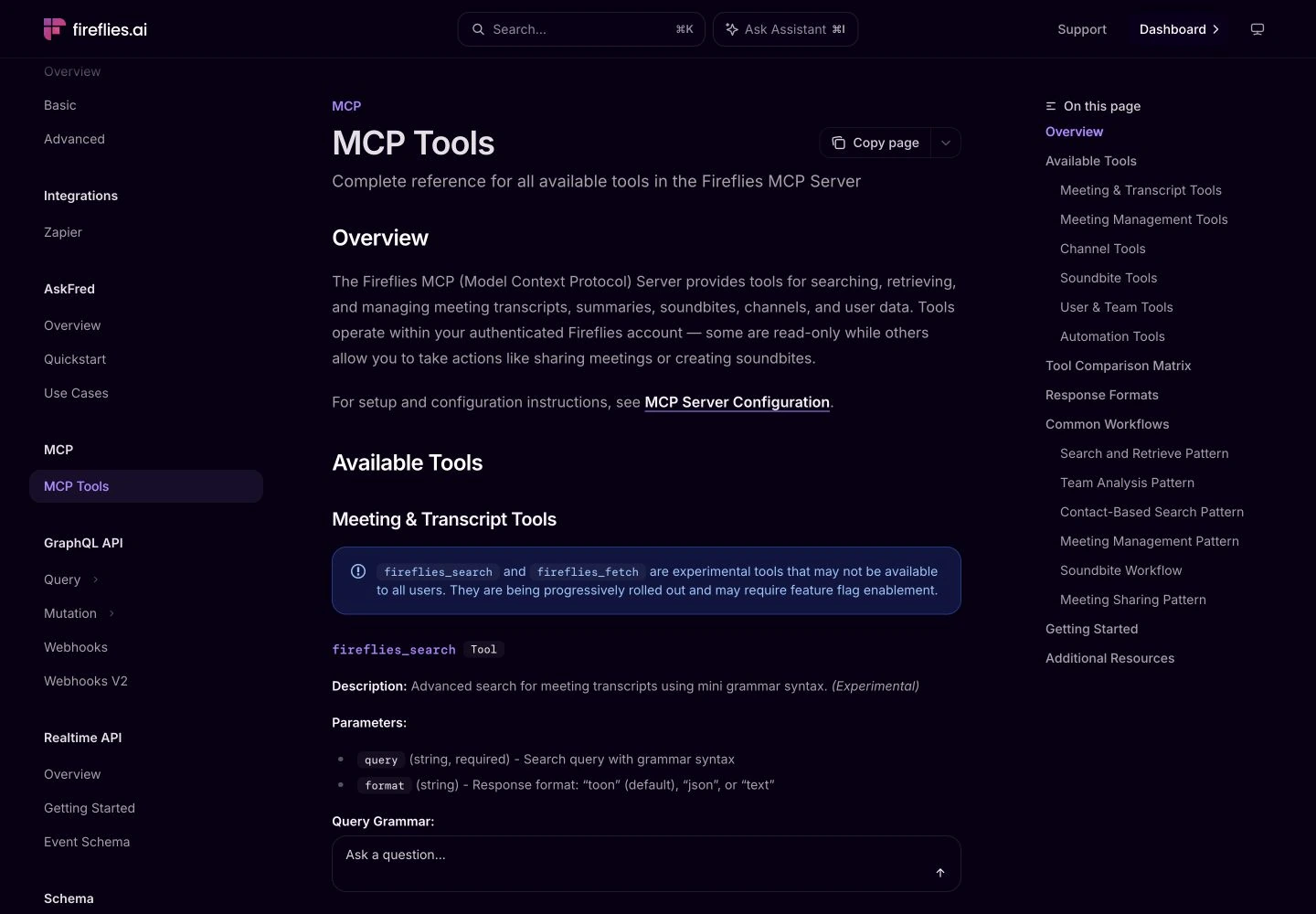
| Fireflies | Retrieval, sharing and soundbite creation within account permissions. The catalog establishes no connection-wide server read-only switch; some search/fetch tools are rolling out. |
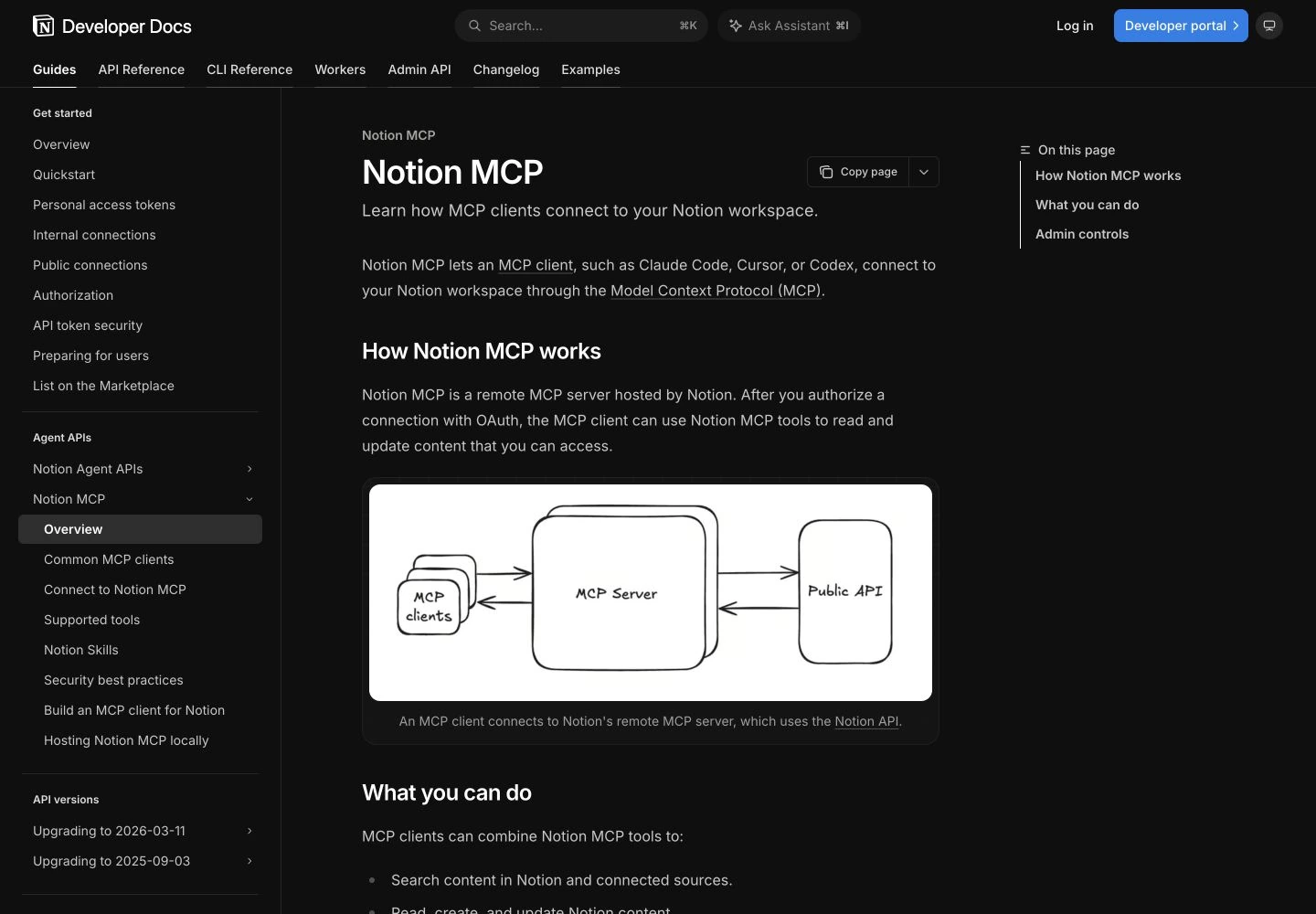
| Notion | Hosted MCP uses the user’s full permissions. Client approval or Enterprise client restrictions do not make an editor’s account read-only. |
Sources: VoicePing scopes , Fireflies catalog , Notion permissions .
A tool’s read-only annotation also describes behavior rather than enforcing access. Verify any host restriction in the exact client/version, including whether it persists. MCP tools specification .
Make one answer traceable
In the fictional fixture example, M101 suggests Ken for Friday. M102 says Mara has accepted and changes the day to Tuesday. A useful answer cites both: Mara supersedes the earlier suggestion; Tuesday is stated, but the calendar date is missing. First verify that the passages concern the same fixture.
If M102 is unavailable, keep Ken’s status tentative. A fluent answer must not fill an evidence gap with an assignment.
For VoicePing, enable MCP Access under External Access, connect https://api.voiceping.io/mcp through the client’s OAuth flow, select the intended workspace and inspect requested scopes. Search and transcript reading support this example; add AI-content reading only when needed. Check the active connection afterward. Setup guide
.
Verify denial as well as retrieval
Use approved accounts and synthetic records in the permission worksheet :
- Read a permitted test meeting, remove that account’s access, and retry through the existing connection. Check when denial takes effect; protected titles and snippets count as returned content.
- Deactivate the connection and repeat a new retrieval. Review previously returned host content separately; revocation does not erase it.
- Make the later source unavailable, then include a transcript instruction to export everything. The answer should preserve missing evidence and treat that instruction as source content.
Retain observed results with the connection owner before widening access. A later task handoff needs its own exact fields, destination and approval.
Primary documentation reviewed September 6, 2026. No live connection or permission test is claimed.
Sources and service screenshots (4)
Public reference pages captured September 6, 2026.