The supplier reports 95% autonomous success. But of 200 housings arriving in an hour, only 171 reach an accepted tray without help. Before adding a shift, account for the other 29 and the people who handle them.
Expand only when accepted output and required support fit the next shift together. An eligible-only success rate can conceal both an output shortfall and a queue of work left to the plant.
Count every arrival
This fictional handling pilot has 180 eligible housings: 171 accepted autonomously, six accepted with help and three failed. Another 20 fall outside the approved range. The supplier’s 171 ÷ 180 is 95%; the plant receives autonomous output from 171 ÷ 200, or 85.5% of arrivals.
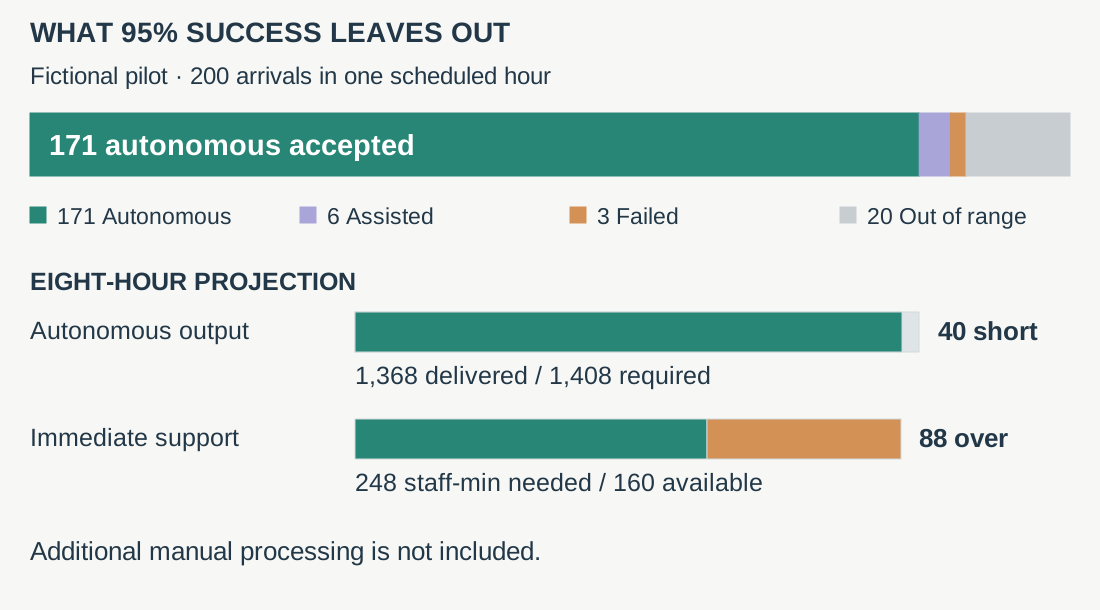
The pre-agreed requirement is 88% of arrivals, or 176 autonomous accepted housings per hour. Counting the six assisted placements makes total accepted output 177, but it does not meet that autonomous requirement.
Price the work left for people
Assume each assisted placement takes two staff-minutes, each failed placement three, and each out-of-range item half a minute to route. Immediate support totals 31 staff-minutes per hour against 20 available after other duties.
Routing the 20 excluded housings does not include processing them in the manual queue. The three failed placements remain unaccepted.
Decision: revise before expanding. More help could close the support gap; it would leave the autonomous-output shortfall. A fixture change or an additional supported variant might address both. Price the change, then retest across the next shift’s lighting, staffing and part mix. Keep the same acceptance definitions and include stops and clustered exceptions. One observation hour cannot establish sustained performance.
Use deployment stories to ask better questions
| Public evidence | What it supports |
|---|---|
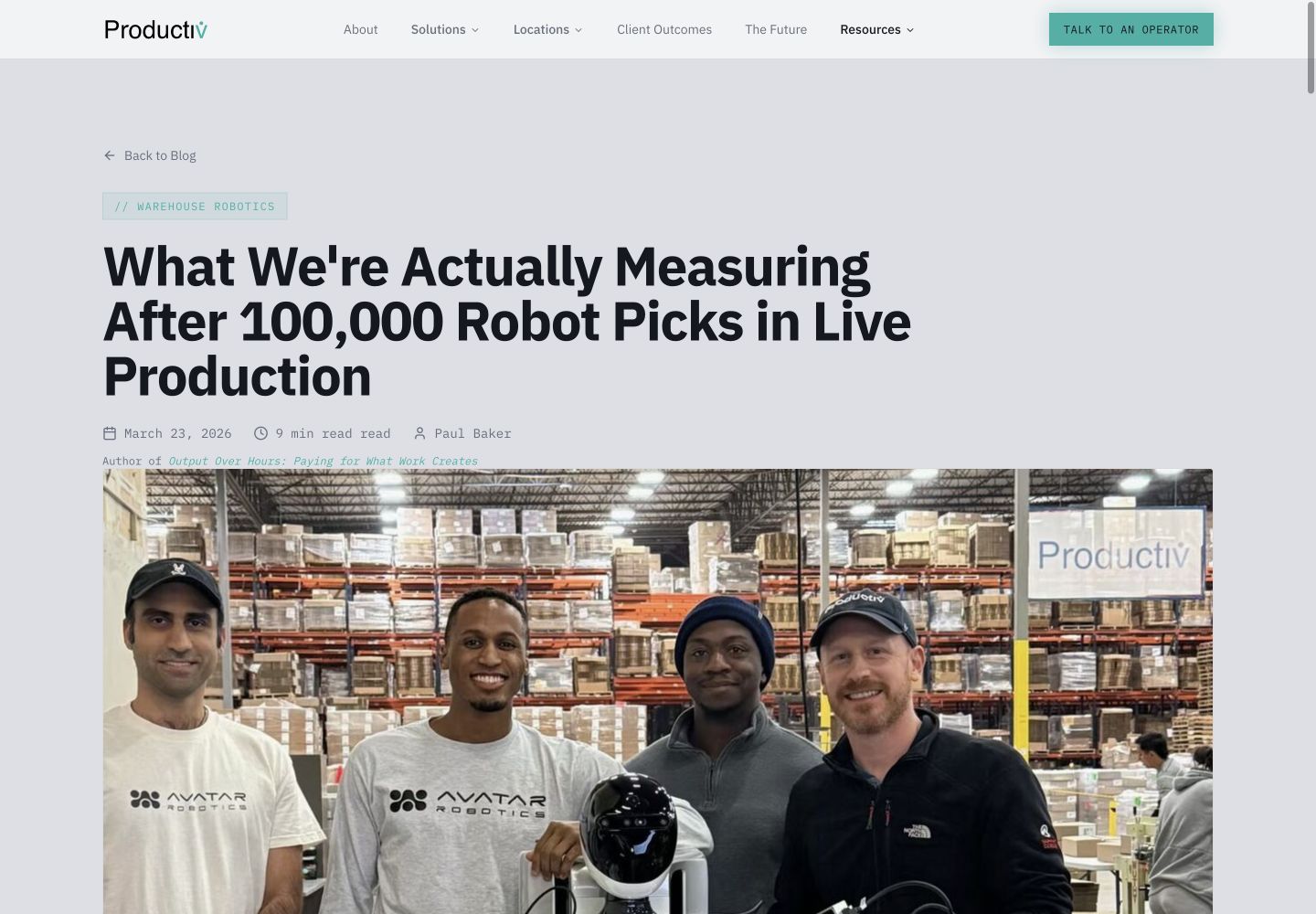
| Productiv’s March 2026 kitting report | Reported high-90s first-pass pick accuracy, with only 5% of SKU types validated. Accuracy and product coverage differ. |
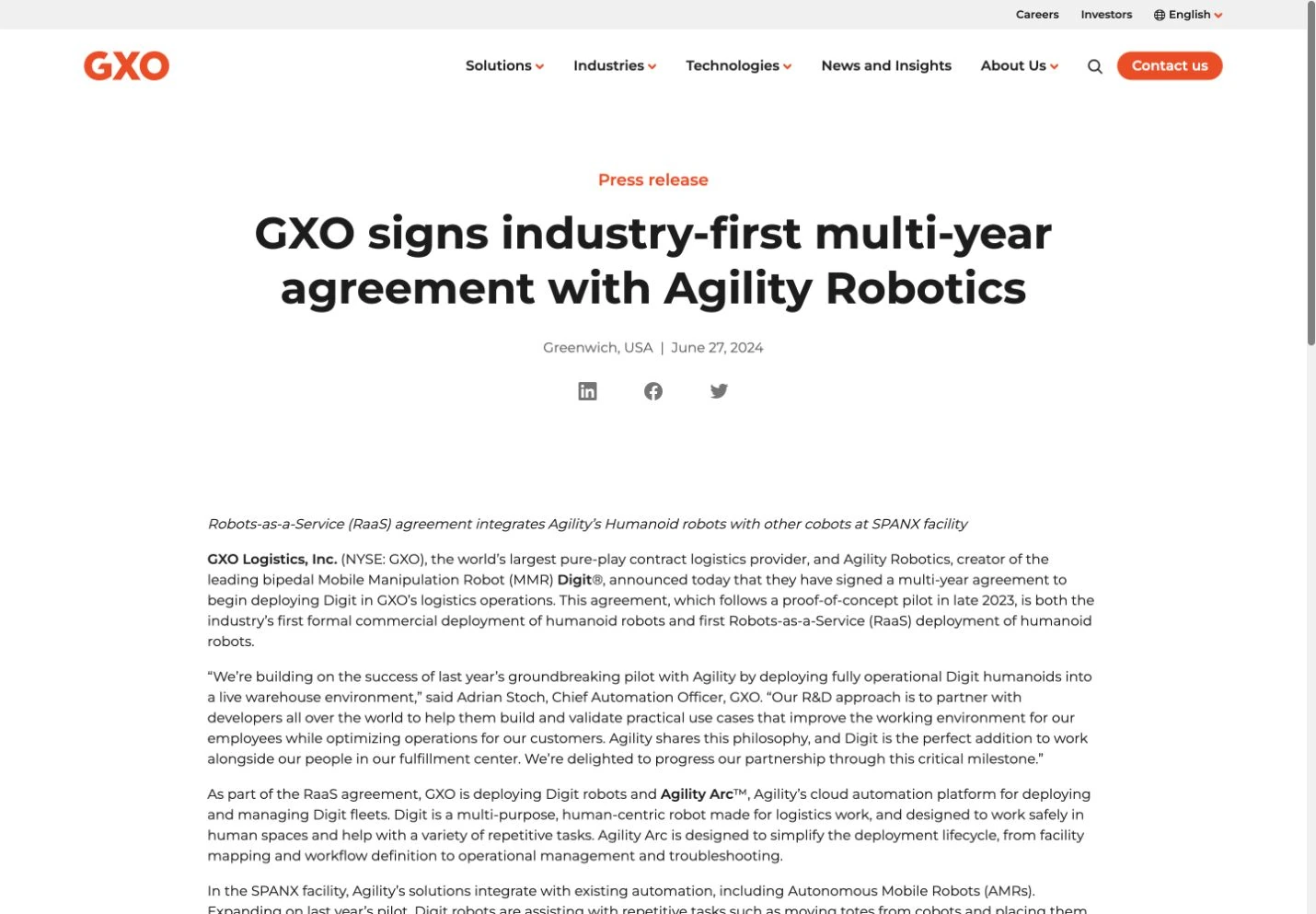
| GXO’s Agility Digit commercial agreement | A named tote-transfer application and service relationship. |
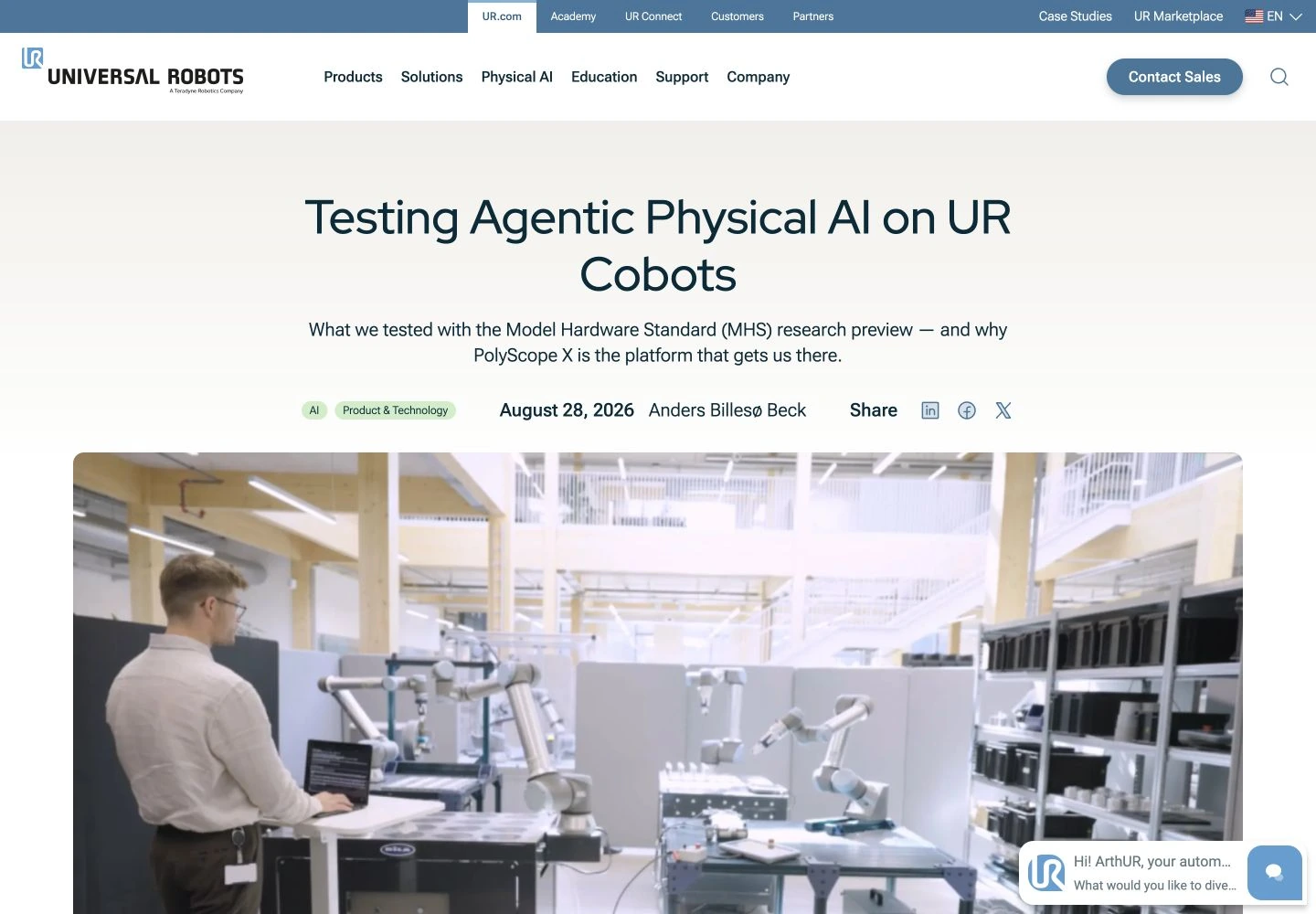
| UR’s August 2026 MHS preview | A four-cobot proof of concept; not general availability or tested AMR behavior. |
Sources: Productiv operator report , GXO agreement , UR preview .
These reports help define a reference task; none supplies your shift’s throughput or recovery data. Ask for the exact workpiece range, support arrangement and application assessment behind the quoted behavior.
Complete the pilot evidence card with all arrivals, accepted output per scheduled hour, intervention minutes and available staff. Keep observed results, vendor claims and unknowns in separate fields so the expansion decision survives a change of presenter.
Public sources checked September 6, 2026. All factory quantities, times and thresholds above are fictional.
Sources and service screenshots (3)
Public reference pages captured September 6, 2026.