In this article
Compare the best VoIP phone translation services for multilingual call centers in 2026, including AI call translation, human interpreters, CCaaS tools, and VoicePing workflows.
Phone support is still one of the hardest channels to globalize. Customers expect immediate answers, agents must understand emotion and urgency, and regulated industries need accurate records. In 2026, the best solution is no longer just “hire multilingual agents” or “add a human interpreter.” Call centers now have a wider set of options: AI voice translation, contact-center-native translation, device-native call translation, carrier-native translation, and human over-the-phone interpretation.
This guide compares the leading VoIP phone translation and interpretation options for multilingual call centers, explains where each category fits, and shows how to evaluate accuracy, compliance, cost, and workflow integration.
Quick Recommendation
| Use case | Best fit | Why |
|---|---|---|
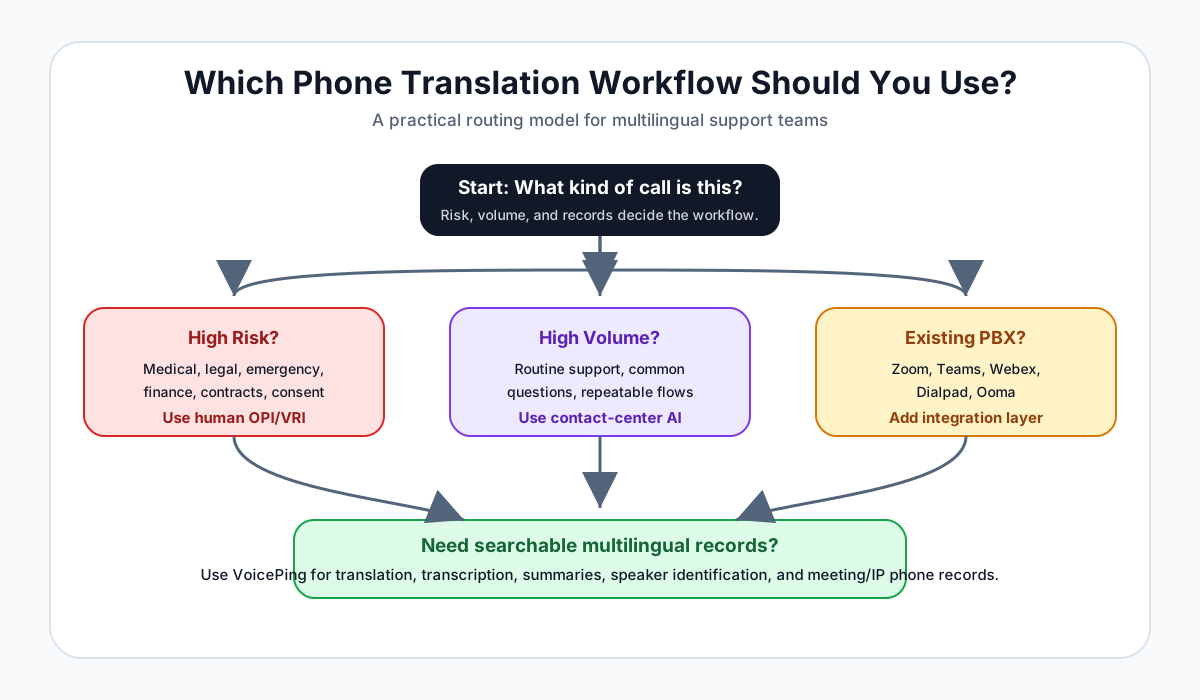
| High-volume routine customer support | Contact-center AI translation | Reduces interpreter wait time and helps existing agents handle more languages. |
| Healthcare, legal, finance, public sector, emergency calls | Human OPI/VRI interpreter | Better for risk, consent, nuance, and compliance-sensitive conversations. |
| Existing Zoom Phone, Teams Phone, Webex, or Ooma PBX | PBX plus translation integration | Keeps current phone infrastructure while adding translation where needed. |
| Internal multilingual meetings, web conference/IP phone recording, summaries | VoicePing | Strong fit for translation, transcription, summaries, and multilingual knowledge capture. |
| Individual international calls | Apple, Samsung, Google Pixel, T-Mobile, or AI Phone-style apps | Useful for personal or SMB calls, but not always enough for enterprise routing, QA, CRM, or compliance. |
What Changed in 2026?
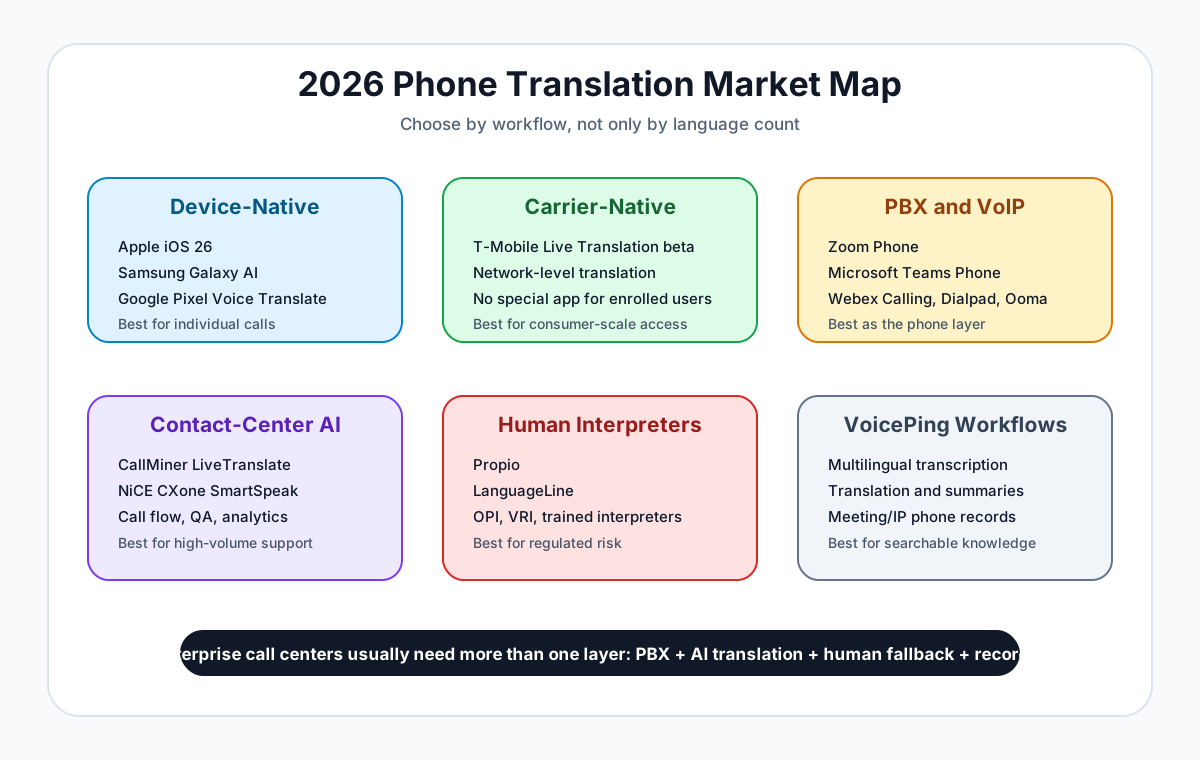
The phone translation market changed quickly. Apple now documents Live Translation for one-on-one Phone calls in iOS 26 for selected languages. Samsung Galaxy AI supports Live Translate through the Samsung phone dialer and selected third-party apps. Google Pixel 10 introduced Voice Translate for phone calls, with on-device processing for supported languages. T-Mobile is testing network-level Live Translation that works without a special app or device for enrolled users.
Those features are important, but they do not replace enterprise contact-center infrastructure. A call center still needs routing, CRM sync, recordings, transcripts, quality assurance, audit logs, permissions, consent handling, and human escalation. The right question is not “Which app translates phone calls?” It is “Which translation workflow fits our call-center risk, scale, and data requirements?”
Main Categories of VoIP Phone Translation
1. Contact-Center AI Translation
These tools are built for live support operations. They usually sit inside or alongside a CCaaS/contact-center platform and translate between the agent and caller in real time.
Best for:
- High-volume support centers
- BPOs
- Travel, retail, logistics, telecom, and SaaS support
- Teams that need agent productivity and QA analytics
Watch for:
- Latency during long speech
- Accent and domain-specific terminology accuracy
- Human fallback
- Recording, transcript, retention, and consent controls
2. PBX/VoIP Platforms With Translation Integrations
Zoom Phone, Microsoft Teams Phone, Cisco Webex Calling, Dialpad, and Ooma are primarily phone systems. Some include AI summaries, transcripts, analytics, or integrations, but most do not provide native full voice-to-voice phone call translation as their core PBX feature.
Best for:
- Companies already standardized on a cloud phone system
- Teams that want to keep their numbers, call queues, and phone workflows
- Businesses willing to integrate translation through APIs, marketplaces, or contact-center add-ons
3. Human Over-the-Phone Interpretation
Providers such as Propio and LanguageLine connect qualified interpreters by phone or video. This approach is slower and more expensive than fully automated AI, but it is still the default choice for medical, legal, government, financial, and emergency conversations.
Best for:
- High-risk or regulated calls
- Rare language requests
- Calls requiring cultural nuance
- Situations where misinterpretation has serious consequences
4. Device-Native and Carrier-Native Translation
Apple, Samsung, Google Pixel, and T-Mobile are moving translation into phones or networks. These are useful for individuals and small teams, but they usually do not solve enterprise contact-center requirements by themselves.
Best for:
- Individual international calling
- Travel, personal calls, and lightweight business calls
- Backup communication when no call-center system exists
5. VoicePing Workflows
VoicePing is strongest for multilingual transcription, translation, summaries, speaker identification, meeting records, and knowledge capture across meetings and web conference/IP phone-related workflows. It should be positioned separately from pure PBX platforms and human interpreter services.
Best for:
- Multilingual internal meetings
- Web conference and IP phone recording workflows
- Meeting minutes and searchable transcripts
- Teams that need summaries, translation history, and multilingual collaboration records
2026 Market Map
Comparison Table: Best VoIP Phone Translation Options
| Service | Category | Native live call translation | Transcripts/summaries | Contact-center fit | Best use case |
|---|---|---|---|---|---|
| CallMiner LiveTranslate | Contact-center AI translation | Yes | Yes, through CallMiner analytics | High | Enterprise multilingual contact centers that need real-time translation and conversation intelligence. |
| NiCE CXone SmartSpeak Real-Time Translation | Contact-center AI translation | Yes | Not currently for this feature, according to NiCE help | High | Contact centers already using or evaluating NiCE CXone. |
| Zoom Phone | Cloud PBX/VoIP | Not shown as native phone translation | AI call summaries and voicemail/task features | Medium to high | Companies using Zoom Phone that can add translation through integrations or contact-center workflows. |
| Microsoft Teams Phone | Cloud PBX/VoIP | Requires integration/workflow | Teams/AI capabilities depend on licenses and scenario | Medium to high | Microsoft 365 organizations that can build around Teams Phone, Teams Premium, Azure AI Speech, or partners. |
| Cisco Webex Calling | Cloud PBX/VoIP | Translation depends on Webex/contact-center setup | AI Assistant for Webex Calling provides transcription and summaries | Medium to high | Cisco environments needing enterprise calling plus AI call records. |
| Dialpad | AI business phone/contact center | Translation should be verified by plan/integration | Real-time transcripts, action notes, summaries | Medium to high | Teams that prioritize AI transcripts, summaries, coaching, and CRM workflows. |
| VoicePing | Multilingual meeting/IP phone workflow | Best for translation, transcription, summaries, and records rather than standalone PBX replacement | Yes | Medium | Teams needing multilingual meeting records, web conference/IP phone transcription, translation, and summaries. |
| AI Phone | Phone translation app | Yes, app-based | App-based transcripts/summaries | Low to medium | Individual or SMB international calls. |
| Ooma Office | SMB VoIP/PBX | No native translation found | AI transcriptions on higher tiers | Low to medium | Small businesses needing affordable VoIP, with translation added separately if needed. |
| Propio | Human OPI/VRI | Human interpreter | Service-dependent | High for regulated calls | Healthcare, legal, financial, government, and urgent calls requiring trained interpreters. |
| LanguageLine | Human OPI/VRI | Human interpreter | Service-dependent | High for regulated calls | Large organizations needing 24/7 professional interpreting in many languages. |
How VoIP Phone Translation Works
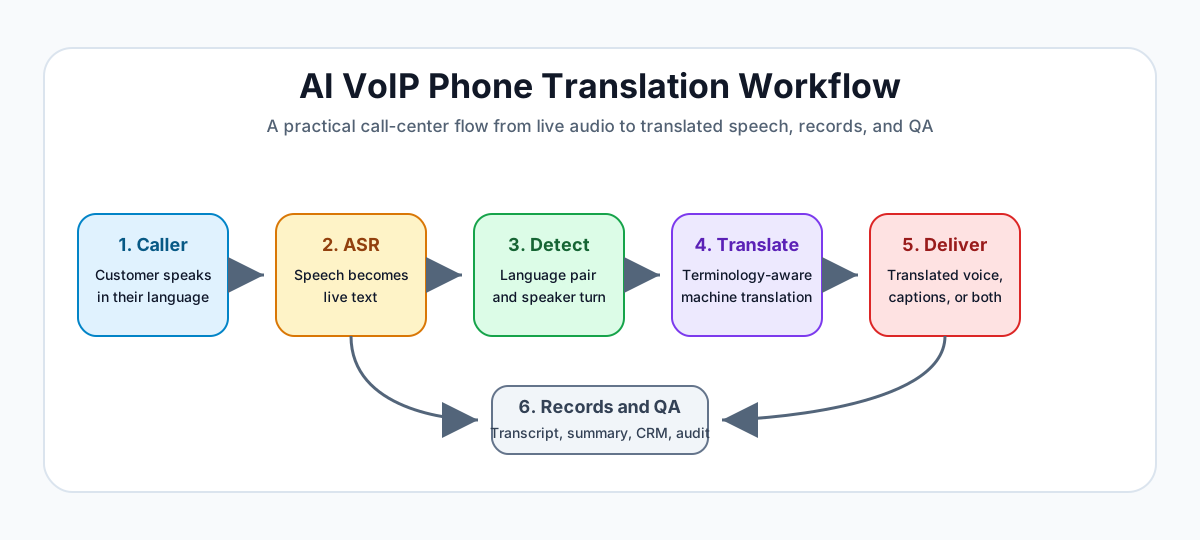
Most AI call translation systems combine five layers:
- Speech recognition (ASR): Converts the caller and agent audio into text.
- Language detection: Identifies the source language or language pair.
- Machine translation: Converts the recognized text into the target language.
- Text-to-speech or captions: Delivers translated audio, subtitles, or both.
- Records and analytics: Stores transcripts, summaries, QA signals, CRM notes, or compliance logs when allowed.
The hard parts are not only translation quality. Real call centers also need routing, noise handling, speaker turn-taking, interruption handling, consent prompts, PII redaction, and consistent terminology. A system that works for a short personal call may fail in a busy contact center if it lacks those operational controls.
Buyer Decision Flow
Evaluation Checklist for Multilingual Call Centers
Translation Quality
Test actual calls, not only demos. Include accents, noisy environments, product names, addresses, numbers, and industry-specific vocabulary. For technical support, add glossary or custom grammar support when available.
Latency
Small delays are acceptable for some support calls, but long or unpredictable delays can make callers think the agent is ignoring them. Ask vendors how they handle long speech, interruptions, and repeated clarification.
Human Fallback
AI should not be the only path for medical, legal, emergency, or emotional calls. Confirm how an agent can transfer to a human interpreter and whether the transcript/context follows the transfer.
Data Governance
Confirm where audio and transcripts are processed, whether data is used for model training, how long recordings are retained, and whether admins can delete, export, or restrict access to call records.
Compliance
Healthcare teams in the United States should review HIPAA and Section 1557 language access obligations. EU-facing teams should confirm GDPR transparency, recording consent, purpose limitation, and retention controls. The European Data Protection Board notes that callers must be informed about call recording purposes and related rights.
Integration
Check whether the tool works with your PBX, CCaaS, CRM, ticketing system, quality management tools, and reporting dashboards. Translation without CRM and QA integration can become an isolated side tool.
Recommended Services
1. CallMiner LiveTranslate
CallMiner LiveTranslate is a contact-center AI translation product built around real-time multilingual conversations and conversation intelligence. It is more directly aligned with call-center operations than a general phone app because it focuses on agent/customer interactions, analytics, compliance, and operational efficiency.
- Category: Contact-center AI translation
- Best for: Enterprise contact centers and BPOs
- Strengths: Real-time translation, conversation intelligence, custom grammar, analytics, compliance-oriented workflow
- Limitations: Enterprise setup and pricing; likely more than a small team needs
2. NiCE CXone SmartSpeak Real-Time Translation
NiCE CXone SmartSpeak Real-Time Translation is an AI-powered real-time interpreter for live phone calls. NiCE states that it supports 96 languages and dialects and is embedded into the call flow after enablement.
- Category: Contact-center AI translation
- Best for: Contact centers already using or evaluating NiCE CXone
- Strengths: Contact-center-native flow, broad language support, no separate app for agents or contacts
- Limitations: NiCE documentation says this feature does not currently support call transcriptions, so pair it with other QA/recording workflows where needed
3. Zoom Phone
Zoom Phone is a cloud phone system with global coverage, call routing, recording, integrations, AI call summaries, and strong adoption among businesses already using Zoom. Zoom says its local telephony service covers 49 countries, with additional coverage through provider partners.
Zoom Phone is a strong PBX foundation, but the current Zoom Phone product page does not present native voice-to-voice phone call translation as a built-in phone feature. For multilingual call centers, treat Zoom Phone as the phone layer and add translation through Zoom Contact Center, marketplace tools, APIs, or interpreter workflows.
- Category: Cloud PBX/VoIP
- Best for: Zoom-first organizations
- Strengths: Global PBX coverage, AI summaries, integrations, call queues, Salesforce/HubSpot integrations
- Limitations: Translation requires a separate workflow or integration
4. Microsoft Teams Phone
Microsoft Teams Phone extends Teams into cloud calling and PSTN connectivity. Microsoft currently lists Teams Phone Standard at $10/user/month in the United States, with higher tiers for pay-as-you-go, domestic, and international calling plans.
Teams meetings can support translated captions through Teams Premium, but Teams Phone should not be described as a native phone-call translation product. For live PSTN call translation, Microsoft-focused teams usually need Azure AI Speech, partner tools, custom development, or a human interpreter workflow.
- Category: Cloud PBX/VoIP
- Best for: Microsoft 365 organizations
- Strengths: Native Teams experience, PSTN options, enterprise identity/security, broad admin controls
- Limitations: Translation is not a simple built-in Teams Phone feature
5. Cisco Webex Calling
Cisco Webex Calling is an enterprise cloud calling platform. Cisco also announced general availability of AI Assistant for Webex Calling , which captures call transcription and generates concise summaries with key points and action items.
For multilingual support, Webex Calling should be evaluated with Webex Contact Center and translation/interpreter integrations rather than treated as a standalone phone translator.
- Category: Cloud PBX/VoIP
- Best for: Cisco/Webex environments
- Strengths: Enterprise calling, Webex ecosystem, AI transcription and summaries
- Limitations: Voice-to-voice call translation depends on the contact-center setup or integrations
6. Dialpad
Dialpad AI provides real-time transcripts, action notes, sentiment detection, and call summaries. Dialpad is useful when the call-center priority is AI-assisted coaching, records, summaries, and CRM productivity.
The article should not overclaim native translation unless the exact Dialpad plan and feature are verified. Position Dialpad as an AI phone/contact-center platform that may support multilingual workflows through product capabilities and integrations.
- Category: AI business phone/contact center
- Best for: Sales/support teams that want AI transcripts and call intelligence
- Strengths: Real-time transcript, action notes, summaries, CRM workflows
- Limitations: Confirm translation support by plan and region before buying
7. VoicePing
VoicePing helps multilingual teams capture, translate, summarize, and search spoken communication. It is especially relevant when the business problem is not only “translate this one call” but also “keep multilingual records, meeting minutes, summaries, and searchable knowledge.”
VoicePing should be used for multilingual meeting workflows, web conference/IP phone transcription and recording workflows, summaries, speaker identification, and translation history. If your call center needs full live PSTN voice-to-voice translation, confirm the current VoicePing product scope and deployment model before positioning it as a PBX replacement.
- Category: Multilingual transcription, translation, and records workflow
- Best for: Internal meetings, web conference/IP phone records, multilingual collaboration, knowledge capture
- Strengths: Translation, transcription, summaries, speaker identification, multilingual meeting records
- Limitations: Not a direct replacement for a full PBX/contact-center suite unless deployed with the right phone workflow
Related VoicePing resources:
- 32 Best Voice Translation Apps in 2026
- Top 25 English Voice Translation Sites, Devices, Apps and Services
- Automatic Meeting Transcription Guide
- 14 Best Automatic Video and Audio Transcription Apps
8. AI Phone
AI Phone is an app-based phone translation option for real-time voice and video call translation. App-store listings currently describe support for more than 150 languages and accents.
This type of service is useful for individuals, travelers, salespeople, and small teams, but it should be evaluated carefully before use in a regulated enterprise call center.
- Category: Phone translation app
- Best for: Individual and SMB international calls
- Strengths: App-based live call translation, broad language coverage, lightweight setup
- Limitations: Enterprise routing, QA, CRM, retention, and compliance controls may not match CCaaS platforms
9. Ooma Office
Ooma Office is a small-business VoIP phone system. Ooma currently lists AI Transcriptions on its Pro Plus plan, but it should not be positioned as a native call-translation product.
- Category: SMB VoIP/PBX
- Best for: Small businesses that need affordable phone service
- Strengths: Simple setup, SMB-friendly pricing, business phone features, AI transcriptions on higher tier
- Limitations: Translation requires third-party tooling or a separate interpreter/AI workflow
10. Propio
Propio Phone Interpretation connects organizations with professional interpreters 24/7 in more than 300 languages. Propio also emphasizes HIPAA and FERPA-compliant systems and telephony/API integrations.
- Category: Human OPI/VRI interpreter
- Best for: Healthcare, legal, finance, education, government, and complex customer conversations
- Strengths: Human accuracy, compliance-oriented services, broad language coverage
- Limitations: Higher per-minute cost and potential wait time versus AI automation
11. LanguageLine
LanguageLine provides professional interpreting by phone, video, onsite, and integrated workflows. It states that audio interpreting is available in 240+ languages and video interpreting in 40+ languages.
- Category: Human OPI/VRI interpreter
- Best for: Large organizations needing established interpreter coverage
- Strengths: 24/7 professional interpreting, broad language coverage, mature enterprise workflows
- Limitations: Cost and speed compared with automated AI translation
What About Apple, Samsung, Google Pixel, and T-Mobile?
These options matter because they shape buyer expectations. They show that live phone translation is becoming normal.
- Apple iOS 26 Live Translation supports one-on-one Phone call translation for selected languages on Apple Intelligence-enabled devices.
- Samsung Galaxy AI Live Translate supports phone calls through the Samsung dialer and selected third-party apps.
- Google Pixel Voice Translate supports real-time phone-call translation on Pixel 10 and later for selected languages.
- T-Mobile Live Translation is a network-level beta for enrolled users, with 50+ languages and no special app required.
However, these are not full call-center platforms. They do not automatically provide enterprise routing, QA analytics, CRM logging, retention policy, supervisor dashboards, or interpreter fallback. For business use, treat them as user-level tools, not the whole call-center architecture.
Compliance and Risk Notes
Language access is not only a convenience issue. In U.S. healthcare, HHS Section 1557 guidance explains that covered entities must take reasonable steps to provide meaningful access for people with limited English proficiency. It also warns against low-quality video remote interpreting and unqualified staff in language assistance scenarios.
For EU-facing businesses, call recordings and transcripts are personal data. The European Data Protection Board says callers must be informed about the recording purpose, recipients, right to object, and access rights. AI translation adds more data processing questions: where audio is processed, whether transcripts are stored, whether data trains models, and how deletion requests are handled.
Before deploying AI phone translation, document:
- Consent and recording notices
- Audio and transcript retention
- Data residency and subprocessors
- PII redaction
- Human fallback
- Audit logs
- Quality review process
- Supported language pairs and known limitations
FAQ
Can Zoom Phone translate calls in real time?
Can Microsoft Teams Phone translate PSTN calls?
What is the difference between AI call translation and phone interpretation?
Is AI phone translation safe for healthcare or legal calls?
Which option is best for a multilingual call center in 2026?
When should we still use human interpreters?
Conclusion
The best VoIP phone translation strategy in 2026 is layered. Use a reliable PBX or CCaaS system for routing, a contact-center AI translation layer for routine multilingual calls, human interpreters for high-risk conversations, and VoicePing-style transcription and translation workflows for meetings, IP phone records, summaries, and multilingual knowledge capture.
For many businesses, the winning setup is not one tool. It is a workflow: AI for speed, human interpreters for risk, and searchable multilingual records so the organization can learn from every conversation.