In this article
Learn what project managers do, which responsibilities and skills matter most, and how tools help teams plan, communicate, and track delivery.
Project managers keep work moving across people, deadlines, budgets, clients, and changing priorities. The role can feel overwhelming when responsibilities are unclear, but it becomes easier to manage when the core duties are visible.
A project manager is responsible for leading a project from start to finish. That usually includes defining the plan, coordinating resources, tracking progress, managing risks, and keeping stakeholders informed.
Who Are Project Managers?
A project manager is the person accountable for planning, coordinating, and guiding a project toward its expected outcome. Project managers work across many domains, including software, engineering, operations, marketing, events, construction, and internal business initiatives.
The exact duties depend on the organization, but the core role is consistent: help the team deliver the right work within agreed constraints.
What Does a Project Manager Do Daily?

1. Scheduling
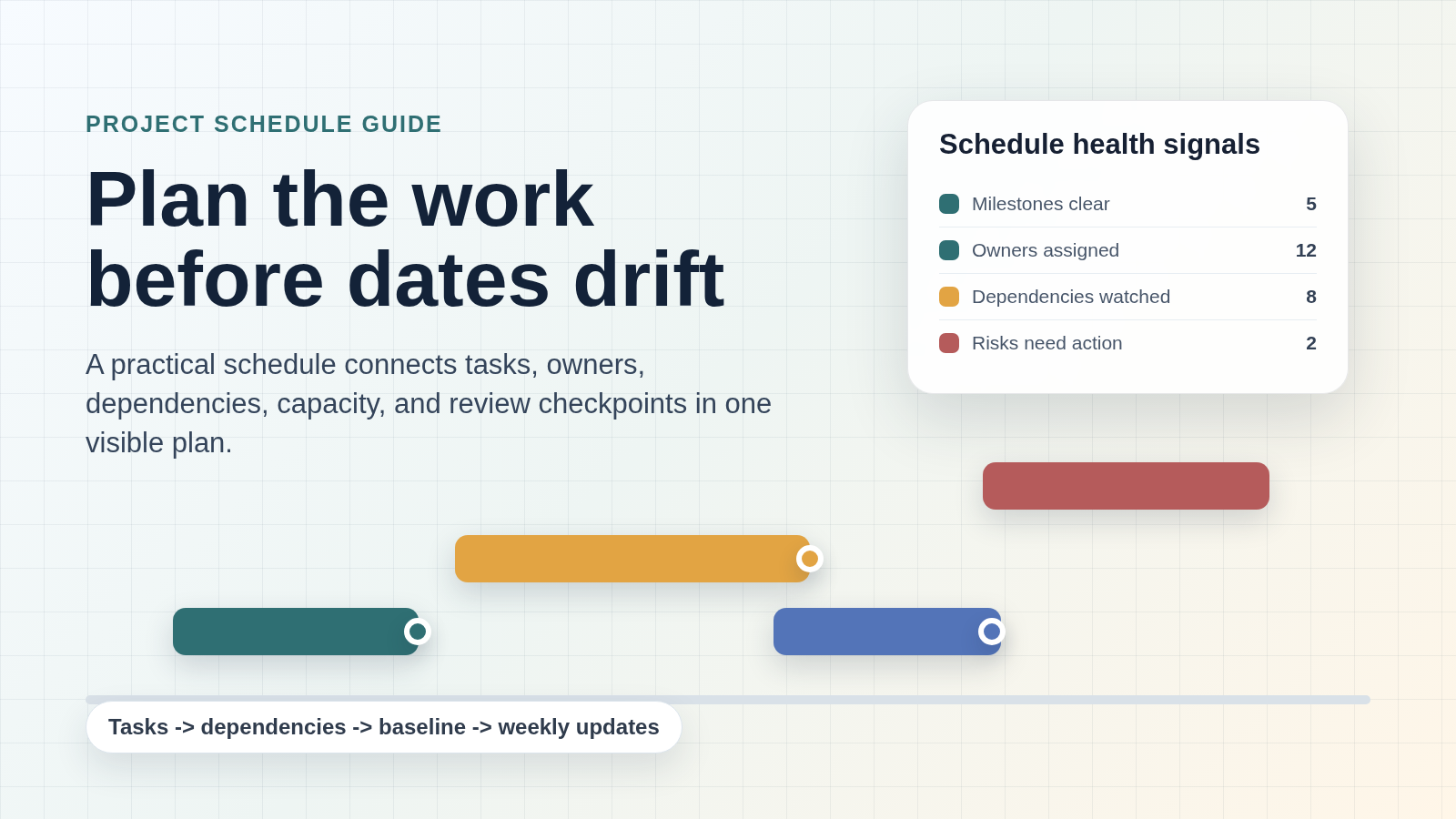
Most projects have constraints such as deadlines, budget, scope, quality requirements, and available staffing. Project managers create and maintain a schedule that makes those constraints realistic.
Key scheduling tasks:
- Break the project down into phases and set deadlines
- Confirm that resources fit within budget limits
- Identify the tasks needed for each phase
- Make sure the team has the necessary tools and skills
- Clarify task dependencies and priorities
- Judge whether the schedule is practical
2. Building and Supporting the Project Team
Project managers help create a team that can do strong work without constant supervision. That means clarifying ownership, removing blockers, and making sure people have the context they need.
Building an effective team involves:
- Supporting the project team with what they need
- Checking in on workload and blockers
- Resolving complaints and obstacles
- Improving workflows when the process slows people down
3. Communicating With Stakeholders
Project managers must communicate effectively with all project stakeholders, including clients, the project team, leadership, vendors, and other departments.
Communication responsibilities:
- Choose and communicate the information stakeholders need
- Discuss necessary plan adjustments
- Listen to stakeholders and take their input into consideration
- Find compromises when requirements or dates change
4. Maintaining Reports and Documentation
Every project produces documentation and reports. Project managers manage this information and share it with the right people so the team can understand decisions, trace progress, and support the work after delivery.
Useful documentation may include:
- Project briefs and requirements
- Meeting notes and decision logs
- Status reports and risk registers
- Handover or maintenance notes
5. Monitoring Project Progress
Project managers monitor progress and identify issues early. This lets them take corrective action before a small delay becomes a larger delivery risk.
Monitoring involves:
- Using project management tools and techniques
- Tracking milestones and deliverables
- Creating progress reports
- Sharing updates with the team and stakeholders
6. Holding Regular Meetings
Regular project team meetings are important for:
- Keeping everyone aligned on goals
- Identifying problems early
- Facilitating communication between team members
7. Reallocating Resources
If some tasks are on track while others are blocked, project managers may reassign people, adjust priorities, or shift timing. Adding more people is not always the right fix, so the manager needs to understand the real constraint before changing the plan.
8. Developing Backup Plans
If the project has a serious problem that cannot be solved by adjusting resources, the project manager should prepare a backup plan that protects the most important outcome:
- Request more budget or extend the release date
- Narrow down requirements if necessary
- Decide what to prioritize and what to defer
9. Making the Project a Success
A project manager’s job is not done when delivery is complete. They should review what worked, what failed, and what should improve next time:
- Write a project post-mortem report
- Conduct interviews with the project team
- Identify areas where improvements can be made
Skills Required for a Project Manager
Strong Communication Skills
Project managers must explain project goals clearly, keep stakeholders informed, and make sure important decisions are understood.
Solid Organizational Skills
They need to create plans, schedules, and systems that make roles, responsibilities, and deadlines easy to follow.
Ability to Take Charge
Project managers must make decisions when necessary and guide the project through tradeoffs around time, budget, quality, and scope.
Negotiation Skills
Project managers often negotiate with vendors, suppliers, clients, and internal stakeholders. They need to find practical agreements when priorities conflict.
Strong Problem-Solving Skills
Project managers face unexpected challenges and need to identify workable solutions quickly.
Leadership
Project managers lead the team, maintain motivation, and help everyone work toward the same goal.
Why Do Project Managers Need a Project Management Tool?
Project managers handle planning, execution, communication, documentation, and reporting every day. A project management tool helps centralize that work so the team does not depend on scattered messages or outdated files.
Project management tools help project managers to:
- Plan, track, and execute projects
- Stay organized and on track
- Communicate with the team
- Keep everyone on the same page
- Effectively manage remote teams
How Can VoicePing Help Project Managers?
VoicePing is a remote collaboration tool that helps project managers keep communication and project context visible. It is useful for teams that need to meet, discuss blockers, share updates, and stay aligned across locations.
Key features for project managers:
- Team communication: Connect with team members quickly during remote work
- Meeting transcription: Keep a searchable record of discussions and decisions
- Shared context: Make updates and project conversations easier to review
VoicePing does not replace every specialized project planning tool, but it can support the communication layer that project managers rely on to keep work moving.
Conclusion
No matter the industry, project managers play a vital role in helping projects finish on time, within budget, and in line with stakeholder expectations.
Planning, execution, communication, risk management, and stakeholder satisfaction are all part of the job. Clear responsibilities and reliable tools make that work easier to manage.
With VoicePing, project managers can stay connected with remote teams and keep important project conversations easier to access.
Try VoicePing free and see how it can help you manage your projects more effectively.